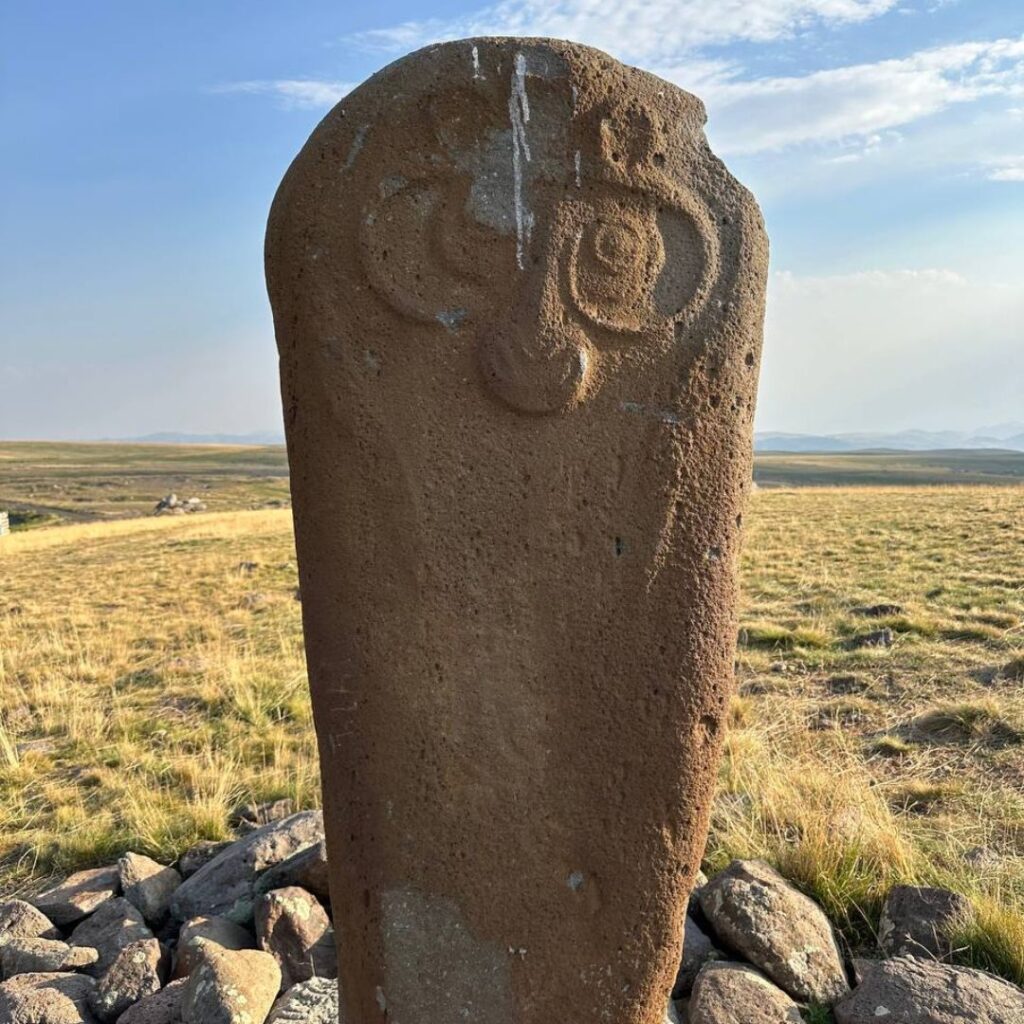
You are walking through the streets of Yerevan when suddenly you stop. A stone stands before you with slanted eyes, a thoughtful almost bookish expression, and the dust of millennia resting on its surface. Is it a dragon or just a sculpture. But if we take this seriously, the vishapakars hidden in Yerevan are not merely carvings. They are ancient travelers that descended from the mountains, carrying stories with them and adapting to the warm asphalt of the capital. Each one has its own fate. Some arrived on their own, some were transported with immense effort, and some were saved from becoming gravestones.
Vishapakars: Stone Giants Between Water and the Cosmos
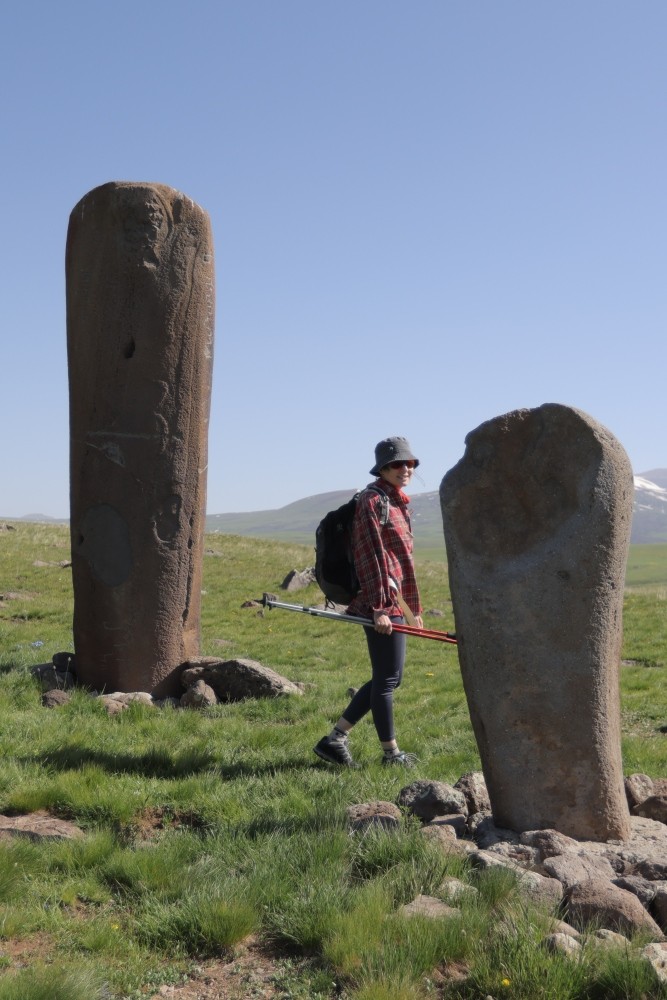
The Armenian Highlands are rich in mysterious stones, yet none are as vivid and symbolic as vishapakars. These are massive monolithic stone monuments often decorated with images of bulls, rams, snakes, storks, and other animals. They have been discovered in the Geghama Mountains, on the slopes of Aragats, in the Chorokh basin, in Garni, Vayots Dzor, the Selim Pass, and even along the shores of Lake Sevan. Dragon stones Armenia is known for are spread across landscapes where nature and myth intertwine.
Vishapakars were usually erected in water rich locations near springs, irrigation channels, marshy meadows, and burial mounds. This suggests that they were originally connected to the cult of water, protecting irrigation systems and agricultural fertility. In this sense, vishap dragon symbolism is closely tied to life giving forces and abundance.
Film about Vishapakar
Yet vishapakars also possess a deeper and darker layer of meaning. They often depict parts of a sacrificed animal such as the head, limbs, or hide of a bull or ox. In this form, the vishapakar resembles the pillar of the Cosmic Tree, a model of the structure of the world itself.
The word vishap here does not refer to a mythical monster in the modern sense, but rather to something gigantic and immense. In different regions, these stones were known by local names such as Dikhtash, Tikmatash, Katkar, or island grave. According to some linguistic theories, the word has Iranian roots and was once used to describe large fish or serpents.
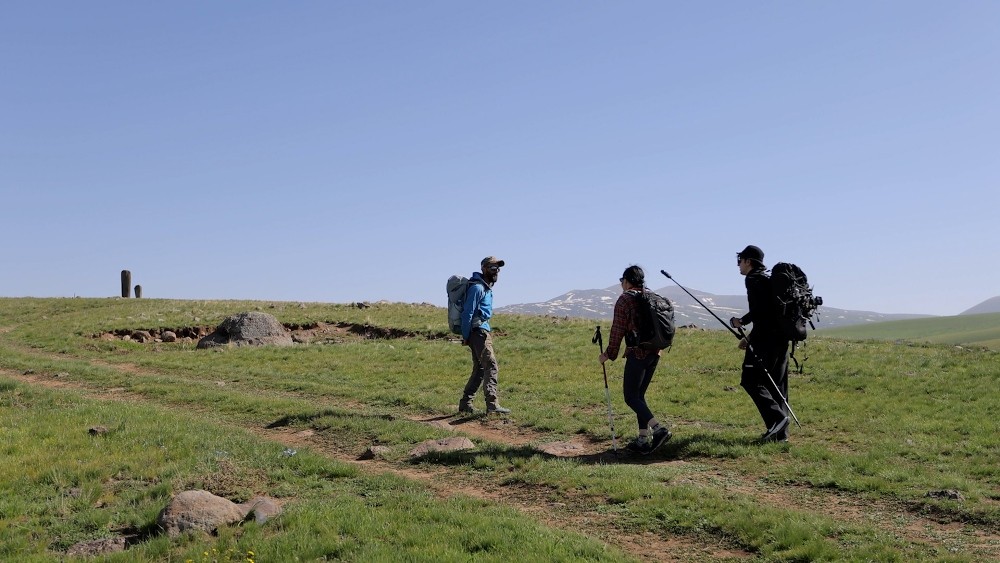
Recent studies, including research by A. Bobokhyan and coauthors, indicate that vishapakars are often found near burial mounds at elevations of 2000 to 3000 meters. They may have functioned as sacred sites connected to funerary rituals. On the southern slope of Aragats at Karmir Sar, a large burial complex with vishapakars has been discovered, likely a ceremonial center with open views toward Masis and Aragats.
If you look closely, some vishapakars feature paired birds that symbolize the sun and the moon, echoing Vedic and ancient Greek traditions. This makes the vishapakar simultaneously a sacrificial pillar, a symbol of water worship, a funerary monument, and a model of the cosmic order. It is no surprise that many consider them part of the most magical places on earth.
The Discovery of Vishapakars and the History of Their Study
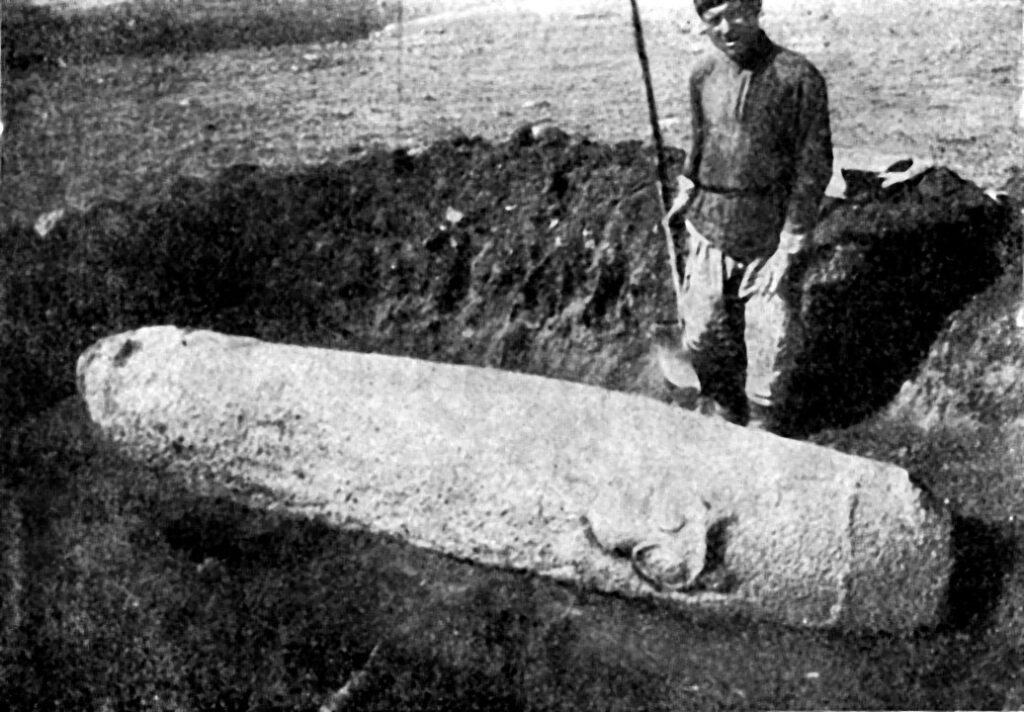
Scientific research on vishapakars began in the 1880s with the work of the Armenian writer and researcher Atropet. In 1909, during excavations at the Temple of Garni, the archaeological expedition led by Nikoghayos Marr and Yakov Smirnov heard local accounts of mysterious stones known as dragons located high in the mountains.
On the slopes of Aragats and the Geghama plateau, enormous monolithic megaliths were discovered. Most of the carvings were fish shaped, and the tallest vishapakar reached a height of 4.75 meters. In 1910, another 27 similar stone monuments were identified not only in the Geghama Mountains, but also in the Sevan basin, southern Georgia, and eastern Turkey. These discoveries marked the beginning of systematic research into vishapakars within the fields of history, archaeology, and cultural heritage.
The Transformation of the Dragon Image Over Time
In early belief systems, dragons were water deities or spirits that ensured fertility and life force. Vishapakars were placed near springs, rivers, and reservoirs, symbolizing their connection to life sustaining moisture. Over time, under the influence of different cultural and religious movements, the image of the dragon shifted and became associated with chaos, storms, and destruction.
In ancient Armenian mythology, the main opponent of the dragons was Vahagn, the god of war and thunder, whose epithet was Vishapakagh, the dragon slayer. This evolution of the vishap dragon reflects broader changes in mythological worldviews across civilizations.
The Perfect Gift: Little Vishaps
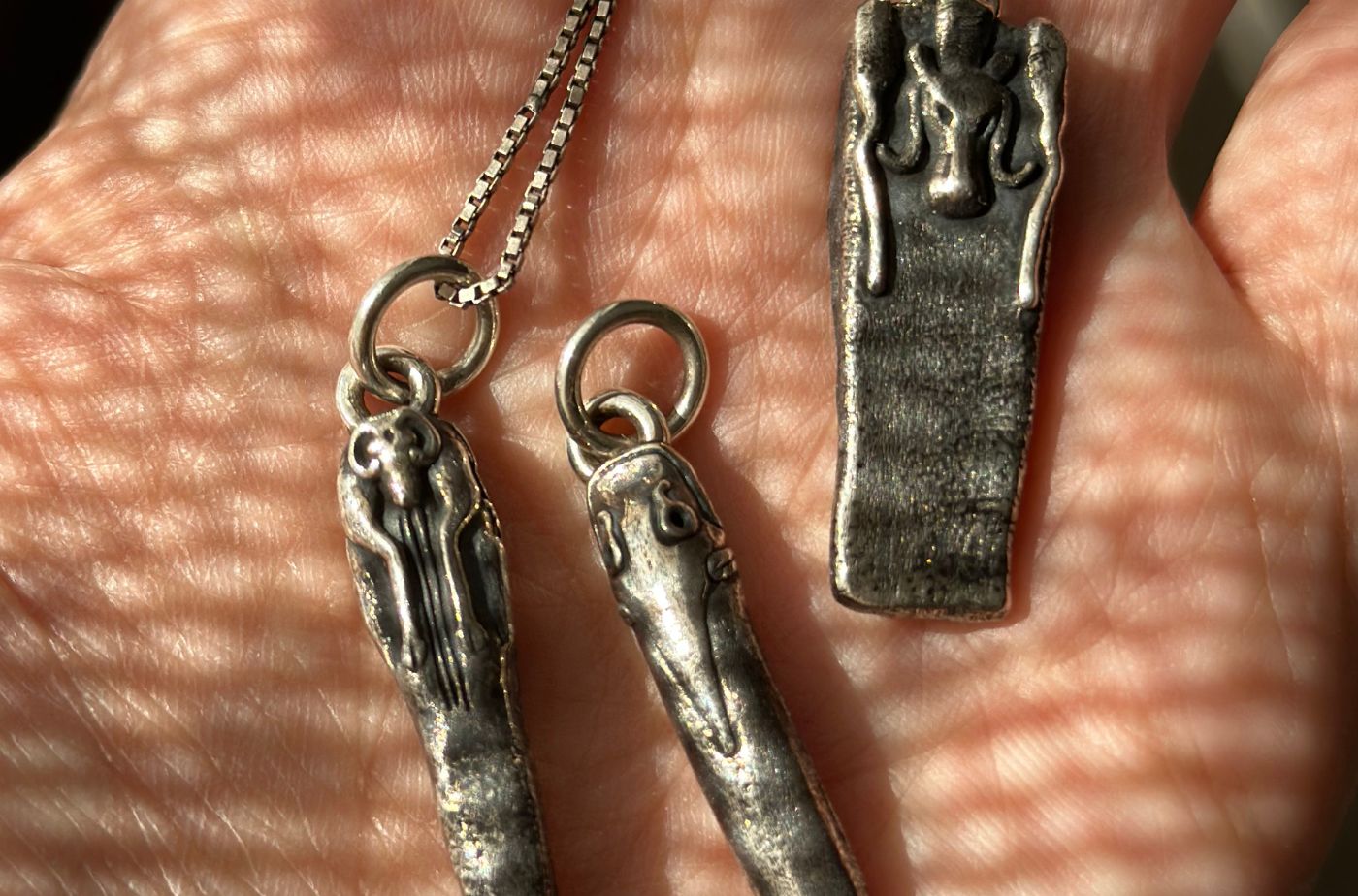
Vishapakars can be encountered not only in nature or within Yerevan’s urban environment, but also worn as jewelry. Collections of three small vishaps have been created in fish shaped, bull headed, and hybrid forms. Each reflects the shape, symbolism, and energy of real vishapakars.
These small vishaps make a wonderful gift for those who love adventure, mystery, and the idea of discovering Armenian culture in a new light. For travelers and culture lovers seeking the most magical places on earth, they serve as a tangible reminder of ancient Armenia.
The book The Secret of the Vishapakar is an excellent gift choice, especially for readers who enjoy adventure, mystery, and new ways of exploring Armenia. Author Artavazd Yeghiazaryan has recently presented the second part of the book, but to fully understand the story, it is best to begin with the first.
It is a pleasure to encounter contemporary Armenian literature that first invites you on a journey through imagination and then through reality, guiding you across the mountains and legends of the country. This fantasy book for children and teenagers is rich in mythology and adventure, and although it is categorized as young adult literature, it can be thoroughly enjoyed at any age. I personally read it in one breath without stopping.